i3D.net reaches 65% of the world’s IP prefixes without Tier‑1 transit: Why it matters

i3D.net-reaches-65-of-IP-prefixes-without-transit
9 March 2026

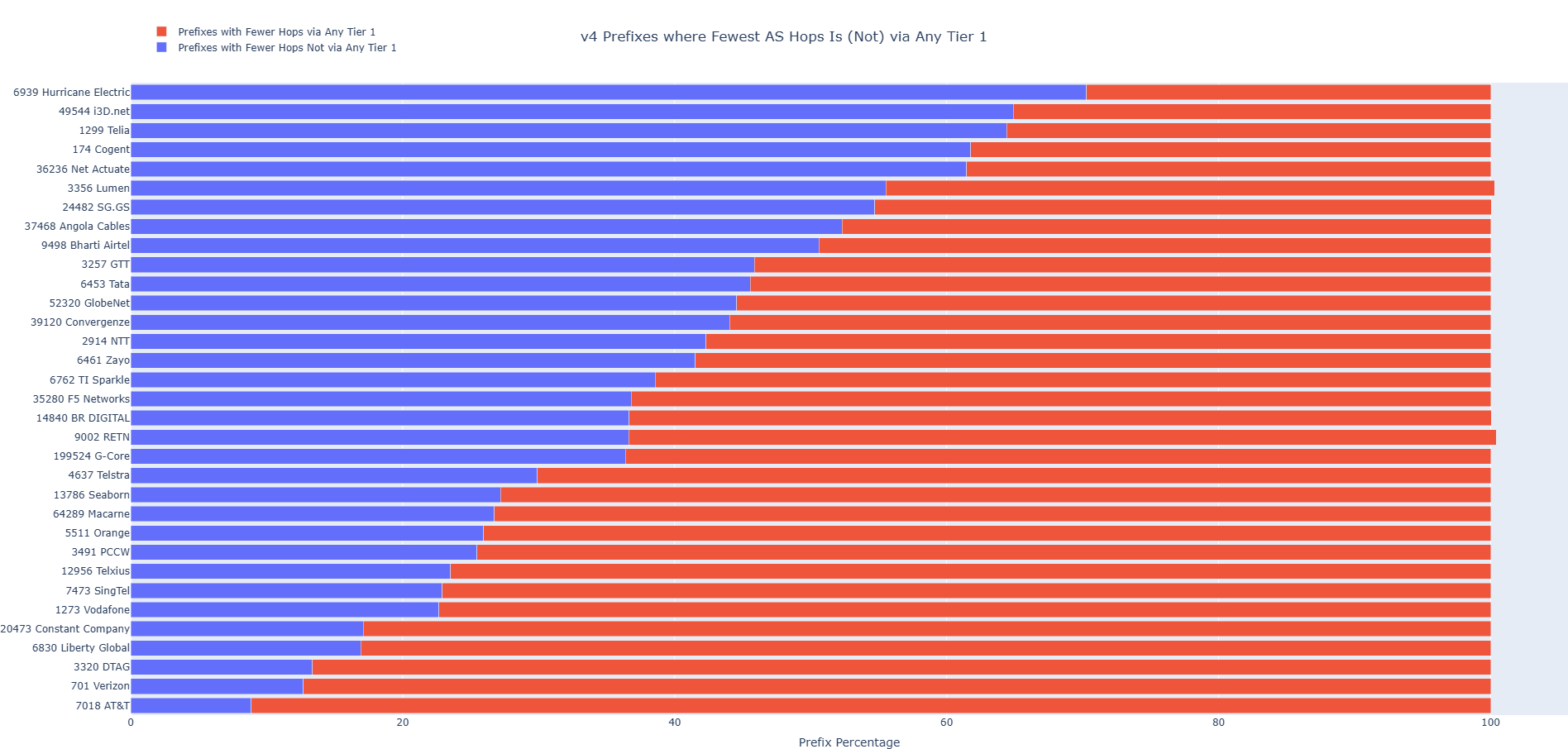
Independent research by James Bensley has shown that i3D.net now reaches 65% of the internet’s prefixes without ever touching a Tier‑1 transit network.  

This number reflects a long-term strategy built around direct routing, open peering, and reducing dependency on networks outside of our control. In a world where traffic can unexpectedly shift because of congestion, outages, or business‑driven peering decisions, having influence over the path data takes is crucial. While it’s a technical achievement, more importantly, it reveals something important about how the internet works and why this approach can create more stable and predictable performance for customers. 

Click the image to enlarge

This plot shows the percentage of IPv4 prefixes each network can reach where the shortest observed AS path does not begin with a Tier 1 ASN. This indicates how dependent each network is on its Tier 1 peers and upstreams. 

i3D.net maintains direct interconnections with several Tier 1 ASNs, many of which are operating as peerings. As a result, the share of internet prefixes we can reach without relying on transit is considerably higher than the share we reach without ever traversing a major Tier‑1 network. For an in‑depth look at the tiering systems and why it often leads to misleading assumptions about network performance and connectivity, visit the analysis.  

The advantages of peering-based interconnections 

Tier‑1 providers operate huge backbones, but their business model is centered on selling transit. As a result, they often avoid widespread free peering. That means traffic can take less direct routes and shorter routes can change abruptly due to commercial decisions. 

By relying on direct peering-based interconnections for the majority of i3D.net’s global reach, we circumvent those variables. 

In practical terms, this means: 

One recent example: a major US network abruptly stopped peering in that region, causing traffic from the US to detour through Europe before returning to the US. This caused a huge latency spike for end users. Because we manage our own routing, we could identify the issue and work directly with the European branch of that network to fix it. 

Direct control makes performance more predictable 

Further, large events, such as game launches, updates, backup restores, anycast routing and marketing spikes, magnify every inefficiency in routing. When customers share their expected loads with us, we prepare capacity and routes accordingly. If something unexpected happens, we can react quickly because we control the routing layer. 

This responsiveness matters because the internet is inherently unpredictable. Cables break. Routes shift. Networks change their policies overnight. The difference lies in how much of that unpredictability reaches the end user. 

A network with broad, direct reach avoids more of that turbulence before it becomes visible. 

How we expand that reach (and why it isn’t about chasing 100%) 

The 65% figure isn’t the end goal. It’s a snapshot of ongoing work. Our team continually maps the “blank spots” where performance could improve through more direct connectivity. Some of these spots are challenging because certain networks intentionally limit their connections as they aim for Tier‑1 status themselves. 

So we focus on improvements that actually benefit customers, not just numbers. 

Our approach is: 

In other words, we care about the connectivity that matters, not the connectivity that looks good on paper. 

A changing internet landscape 

Some networks are consolidating their connections in pursuit of revenue from IP transit, creating more situations where traffic is funneled through a smaller number of interconnections. As this trend grows, the value of a connectivity strategy built around diversity and direct reach increases. 

The independent research highlights that i3D.net is already positioned strongly within this new reality: a routing model that blends the scale of a global backbone with the performance benefits of local, direct interconnections. 

Why this research matters 

The finding that 65% of global prefixes are reached without Tier‑1 transit underscores the practical benefits of our approach: 

For customers, the outcome is straightforward: a network that behaves reliably even when the wider internet doesn’t.  

Want to learn more? Talk to our network experts about how direct routing and global reach can support your workloads. 

Main Take-Aways

i3D.net’s ability to reach 65% of global prefixes without Tier‑1 transit shows that its direct‑routing strategy delivers more predictable, lower‑latency performance by avoiding unnecessary detours and external network dependencies. In practice, this means customers get a more stable, resilient network experience—even when the wider internet is unstable.